
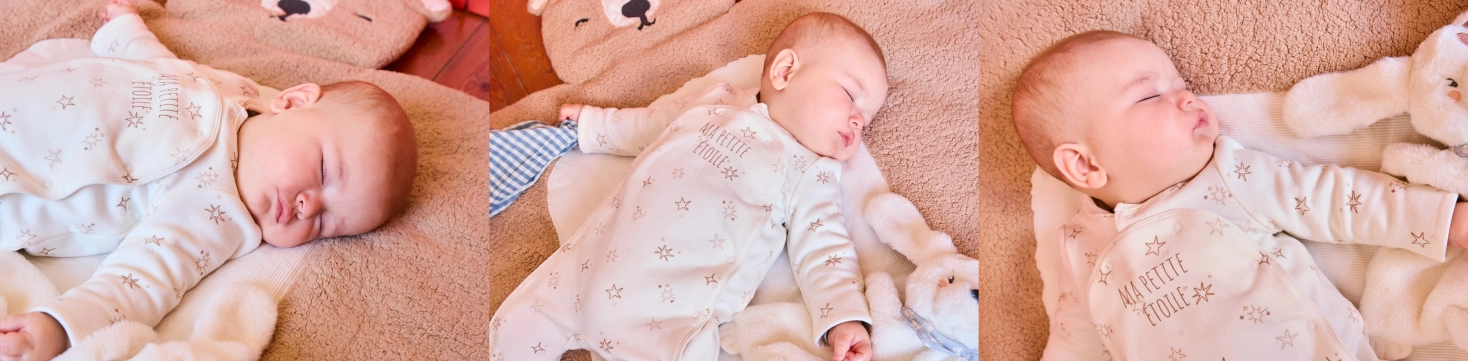
“Sleep now, because soon you won’t be able to.”
When you’re pregnant, there’s always someone who comes out with that one. As if you’re never going to sleep again, usually with that little knowing smile to go with it.
And then there’s the classic: “You’ll see, you’ll spend so much time watching your baby sleep that you won’t even want to sleep yourself.”
Well, at least that one’s kind of sweet. 🥰
The truth is, yes, your nights are going to change. Things won’t be quite the same as before. But different doesn’t mean disastrous. We know only too well that a lack of sleep can drive you a little crazy. And yet, plenty of people who’ve already been through it have gone on to have more babies.
That must mean something. 😄
The idea here is to understand how baby really works. Because expecting them not to wake up during the night means completely missing what they actually need. They have their own rhythm, their own little sleep train, and they’re expecting you to hop aboard with them. 🚂
So yes, there will be wake-ups, sometimes just when you really, really wanted to keep sleeping. But we chose to have a baby because we wanted one, and despite the broken nights, it’s still a whole lot of happiness. ❤️
This guide is here to help you get used to this brand-new rhythm.
How does baby sleep work?
Baby’s sleep isn’t like ours. And, as with most things, once you understand how it works, it changes the way you experience those nights.
Baby moves from one sleep cycle to the next, with short periods of wakefulness in between – those famous little night-time wake-ups. Most of the time, they drift back to sleep on their own without you even noticing. Sometimes, they need a little helping hand.
Both are completely normal – every baby is different.
Their sleep cycles last around 45 minutes, compared with 90 minutes for adults. Shorter, more frequent and broken up by little wake-ups. These can make it feel like baby never really sleeps. But they do, promise. 😄
Baby’s sleep patterns by age
We often talk about the sleep train: that little window when baby is ready to drift off, and you really don’t want to miss it unless you fancy a super-excited baby for the next two hours. 😄
Suddenly, we understand all those parents we used to look at strangely when they said, “I can’t come – if they miss nap time, their whole routine will be thrown off.” OUR APOLOGIES 🙏
Every baby has their own rhythm, but there are some general patterns depending on age.
| Age | Total sleep | Sleep cycles | Naps |
|---|---|---|---|
| 0–2 months | 16–20 hrs/day | ~45 min, every 2 hrs | Throughout the day |
| 2–4 months | 14–16 hrs/day | Cycles get longer | 3–5 naps/day |
| 4–6 months | 12–15 hrs/day | Longer stretches at night | 2–3 naps/day |
| 6–12 months | 12–14 hrs/day | Cycles become more like adults’ | 2 naps/day |
These figures are averages, not targets you absolutely have to hit. Every baby has their own rhythm, and that’s OK.
And comparisons with your colleague’s baby who’s been sleeping 12 hours straight since they were two months old? We’ll give those a miss. 😄
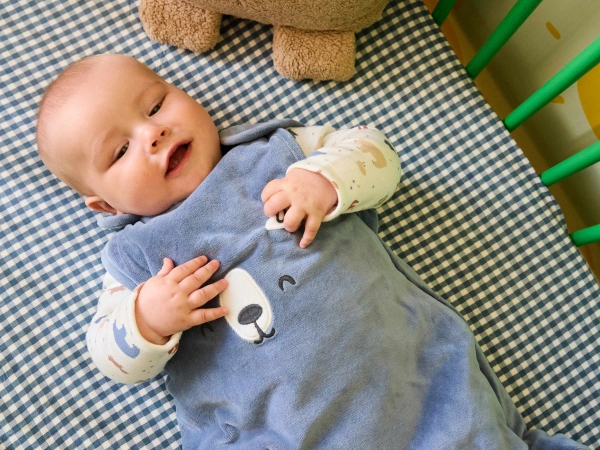
Naps: a necessity
An overtired baby sleeps less well at night. It sounds counterintuitive, but that’s how it works. Naps don’t steal from night-time sleep – they actually help prepare for it.
So that old “wake them up or they won’t sleep tonight” advice is a myth???
Pretty much, yes. During the first few weeks, baby naps throughout the day. At around 3–4 months, naps start to become more regular. By around 12–18 months, most babies generally move to a single nap after lunch. The aim is to avoid letting baby go past their sleep window. Which brings us nicely to the next point.

Recognising the signs that baby is tired
It’s a bit like a parenting superpower that develops instinctively. Because a baby who misses the sleep train is an unsettled baby who’ll take twice as long to drift off.
You know that “they seem wide awake, let’s wait a little longer” moment that you end up regretting? 😄
Well, to avoid that, there are a few tell-tale signs:
- Rubbing their eyes. The classic. As soon as those little hands start making their way towards the eyes, it’s time.
- Yawning. One, two, three in a row – baby is sending a pretty clear message. OK, we get it.
- Staring into space. Baby fixes their eyes on something without really seeing it. They’re starting to switch off – a bit like you in that Tuesday morning meeting after a broken night’s sleep. 🧟
- Sudden restlessness. Oddly enough, a baby who suddenly gets fidgety for no obvious reason and becomes difficult to settle is often a tired baby. Even when you’re thinking, “But they’re FULL of energy!”
- Rosy cheeks and eyes that look just a little too bright. Drop everything. It’s time.
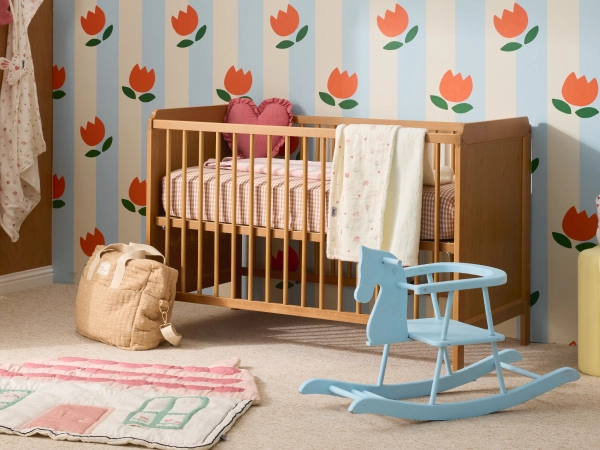
What is the best environment for baby’s sleep?
Room temperature: between 18 and 20°C
It’s often the first question. Too warm? Too cold? The ideal temperature for a baby’s bedroom is between 18 and 20°C. A cooler room is better than one that’s too warm.
The back-of-the-neck check: we talk about it in our guide on how to dress baby for sleep. If it feels cold, add a layer. If it feels hot and clammy, take one off. It’s a pretty handy little check. 😄
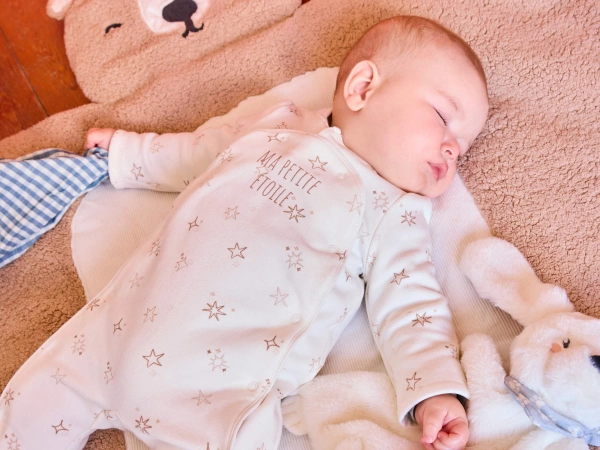
Light and noise: what we believe and what really helps
Baby doesn’t need complete silence. They spent nine months in a pretty noisy tummy. So there’s no need to tiptoe around the whole house or avoid flushing the toilet.
For night-time changes, go for a warm-coloured night light (orange or amber, not blue). Blue light can interfere with melatonin, even in very young babies. Put simply: it can SERIOUSLY disrupt sleep…
Natural daylight helps baby develop their day/night rhythm. Simple, but really effective. And no, this one isn’t a myth: plunging the room into darkness before a nap doesn’t necessarily help baby drift off.
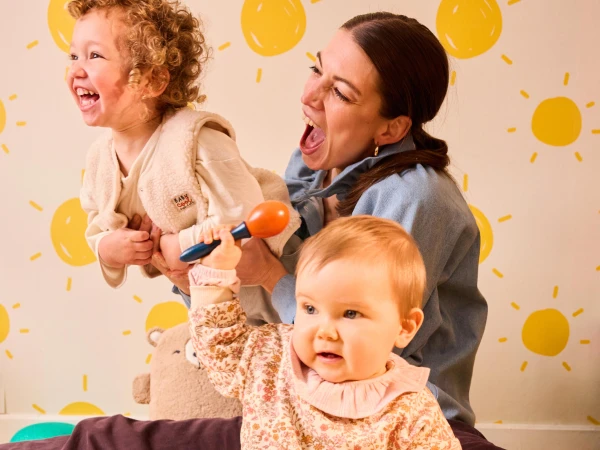
The bedtime routine: why repetition makes all the difference
It’s often the first question. Too warm? Too cold? The ideal temperature for a baby’s bedroom is between 18 and 20°C. A cooler room is better than one that’s too warm.
The back-of-the-neck check: we talk about it in our guide on how to dress baby for sleep. If it feels cold, add a layer. If it feels hot and clammy, take one off. It’s a pretty handy little check. 😄
How should you dress baby for sleep?
It’s THE question. The one that comes up with every change of season and every evening at the changing table. The honest answer: it depends. On the season, the temperature of the room and your baby. But there are a few simple rules to follow.
And while it’s definitely not the only thing that affects baby’s sleep, getting it right can make quite a difference.
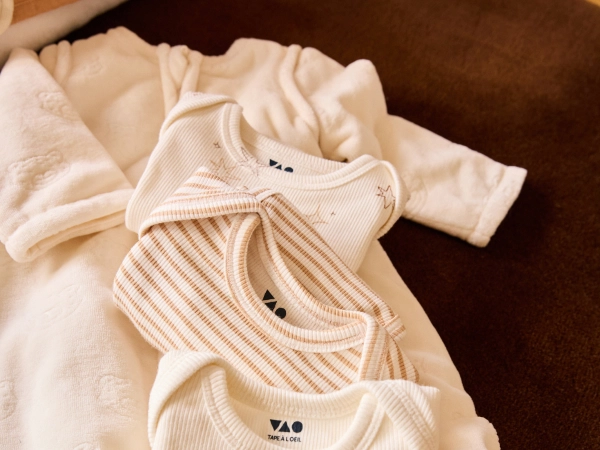
The bodysuit + sleepsuit + baby sleeping bag trio
The bodysuit is the foundation. Soft cotton, short or long sleeves depending on the season, with poppers underneath to make nappy changes easier. We also talk about it in our guide to dressing baby at night because it’s the layer that stays on all night.
The sleepsuit can be warm or lightweight depending on the season. As a simple guide, go for velour or fleece in winter and lightweight cotton in summer.
The baby sleeping bag replaces a blanket. Baby wriggles around, pulls off their best acrobatic moves, and a blanket always seems to end up on the floor – it sometimes has other plans than staying on baby. A sleeping bag, on the other hand, stays securely in place and keeps baby covered all night without ending up over their face.
The TOG rating helps you choose the right one according to the room temperature. Good news: we’ve got just the thing to help you with that. 😉
Tape à l'œil products for baby’s nights
These products help create a comfortable and suitable sleep environment. They won’t solve sleep difficulties – no product can, because every human being is different, and that’s what makes us all special.
What they can do is help make nights a little more peaceful.
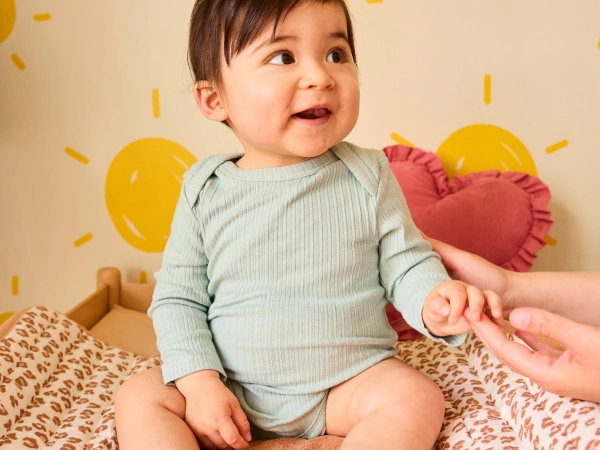
Bodysuits and sleepsuits: everyday essentials
A soft cotton bodysuit, with short or long sleeves. It’s worth having several, because with all those changes, you’ll be glad to have a few spares.
Go up a size if baby is growing quickly. Which often seems to happen just after you’ve bought six in exactly the same size. 😄
Choose a warm or lightweight sleepsuit depending on the season. And check the fastening – you’ll know exactly why if you’ve read our previous guide. 😉
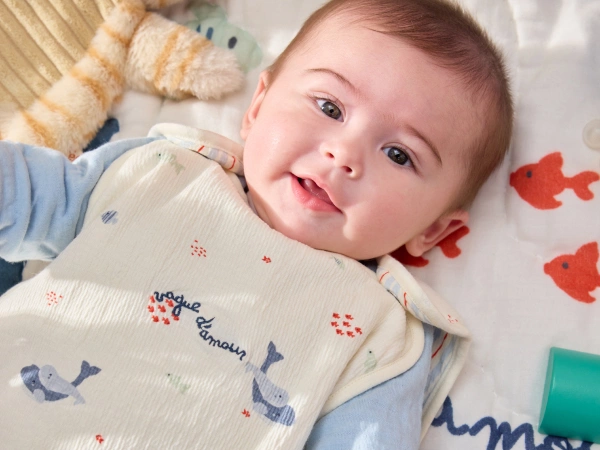
The baby sleeping bag: a night-time essential
Choose the right TOG for the room temperature, make sure it fits securely around the shoulders and that the size is right, without being too loose around the neck or armholes. Our little acrobat needs to be able to move freely without disappearing down into their sleeping bag. 🤸♀️
And yes, as always, skip the fabric softener to help protect the fibres and keep everything soft, wash after wash. To be fair, fabric softener hasn’t really been our best mate since baby arrived anyway…
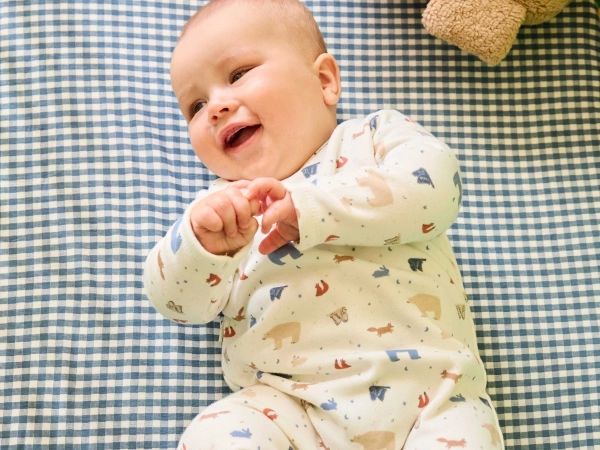
Night-time (and daytime) accessories
A comforter can go in the cot from 6 months. Before then, it isn’t recommended for safety reasons.
But baby can still see and smell it to start forming that bond. And buy two identical ones from day one. When the first one disappears (and somehow, they always do), you’ll be very glad to have its twin. 😄
Then there’s the muslin cloth. We absolutely LOVE this one when baby needs burping in the middle of the night. It can save us from changing our T-shirt and baby from needing a fresh sleepsuit. It goes everywhere with us and, unlike fabric softener, this one really is our best mate. 🤣
A dummy with a handy clip. It looks cute, but more importantly, it’s mega useful when you realise you’re spending more time looking for the dummy than actually enjoying the benefits of having one…
And a soft night light for those gentle night-time changes without waking up the whole house.
Baby sleep FAQ
Why does baby wake up so often at night?
Because their sleep cycles are short and they may briefly wake up between cycles. It’s biological, not a problem. Most of the time, baby drifts back to sleep on their own. Sometimes they need a little help. You know your baby best – it’s a stage, not a problem…
How much sleep does a baby need depending on their age?
A lot – and less than you might think at the same time. A newborn can sleep for up to 20 hours a day, but rarely all in one go. We’ve brought together the figures by age in the sleep patterns table above.
What temperature should a baby’s room be for sleep?
Between 18 and 20°C. Adjust baby’s nightwear accordingly and check the back of their neck to see if you need to add or remove a layer. Always the back of the neck. 😉
Which baby sleeping bag should you choose to help baby sleep well?
One that suits the temperature of the room. That’s exactly what the TOG rating is for – it helps guide your choice.
At what age does baby start sleeping through the night?
There’s no set age. Between 3 and 6 months, many babies start sleeping for stretches of 5 to 6 hours at a time. Not 12 hours – let’s set the record straight. 😄 And remember, that’s just an average. Some babies get there earlier, others later. One thing’s for sure: it will come.
Does a comforter help baby sleep?
For many babies, yes. From 6 months, it can go in the cot and become a reassuring familiar object between sleep cycles. Before 6 months, you can start building that bond by letting baby see and smell it.
Baby’s sleep develops gradually.
There’s no miracle solution, but understanding how baby’s sleep works, creating the right environment and learning to read their signals can actually help quite a lot.