
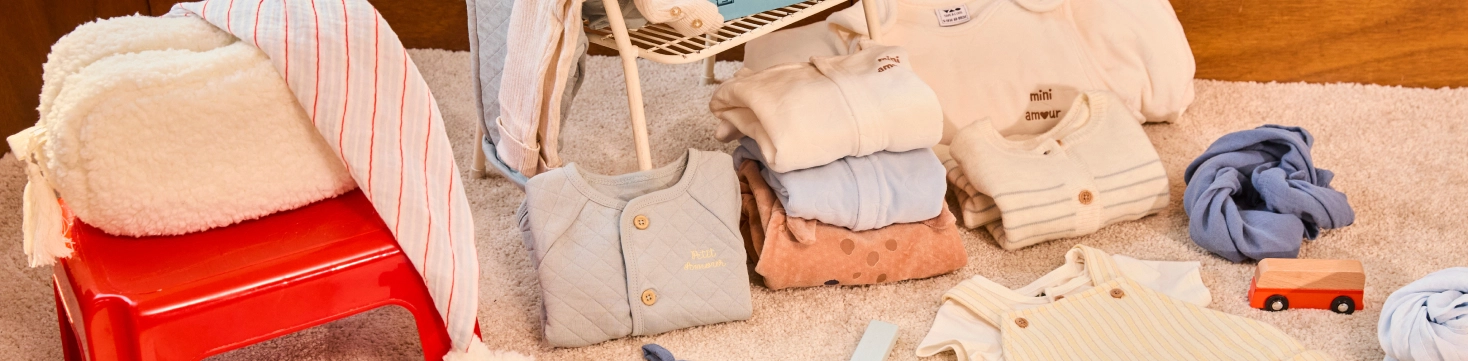
It's 9 pm.
Bedtime has arrived, and your little one is making sure you know it.
To help them settle, you gently close the curtains, dim the lights, little eyes begin to rub, and those final cuddles become part of the bedtime routine. In just a few moments, they'll drift off, either snuggled up to their comforter or somehow lying at the opposite end of the cot, because babies have their own rules. 😄
And yet, in a matter of seconds, a thousand questions race through your mind. Is a bodysuit enough? Should you add sleepsuit? Is this sleeping bag the right one? What if you've dressed them too warmly… or not warmly enough?
Because really, all you want is for your baby to sleep comfortably through the night without turning bedtime into an escape room challenge.
Not to mention trying to fasten poppers in the dark while your baby is already starting to lose patience.
Sometimes, you just wish your baby could whisper exactly what they need.
Think of this guide as that little whisper. Simple, practical advice to help you dress your baby for bedtime with confidence, whatever the situation.
A few essentials, a couple of minutes, and your little one is all set for a cosy night's sleep. All that's left to do is wish them sweet dreams... and hope you get to enjoy yours too. 😄

Why does baby feel temperature changes differently?
Their body is still learning how to regulate its temperature.
Blimey, that almost sounds like a science lesson. And let's face it, we haven't got time to look up what all those fancy terms mean. 😅
So instead, we keep an eye on baby and check the back of their neck.
Warm and dry? Baby's just right. Warm and sweaty? They're too hot, so take off a layer. Cool? Add one.
Baby's hands and feet often feel cold, and that's perfectly normal. Their blood circulation prioritises the most important organs first.
That means less blood reaches their hands and feet, which explains why they often feel cooler.
That's why the back of baby's neck is the best place to check whether they're at a comfortable temperature.
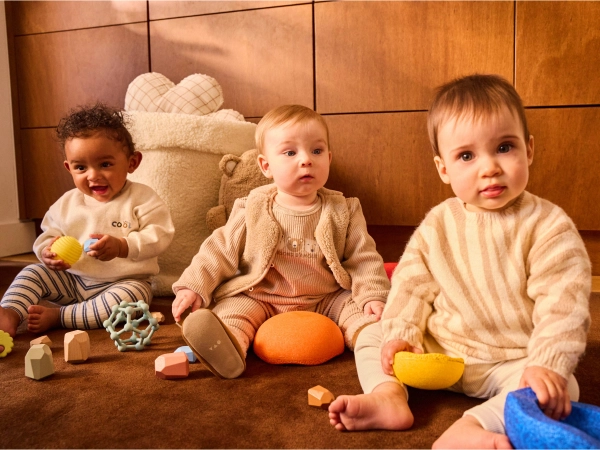
The layering trick: keeping things flexible from the morning onwards
The basic rule? One more layer than we're wearing. In theory, anyway. In practice, it all depends on the situation. And that's exactly why we call it a trick rather than a rule.
What we're really after is something that makes everyday life easier: thin layers we can pile on and take off without having to completely undress baby on a park bench. Poppers instead of buttons. Zips instead of roll-neck tops. It's all about flexibility.
12°C in the morning, 22°C in the afternoon. That's a typical day in spring or autumn. We dress baby for the morning chill, then take off layers as the day warms up. That's the layering trick.
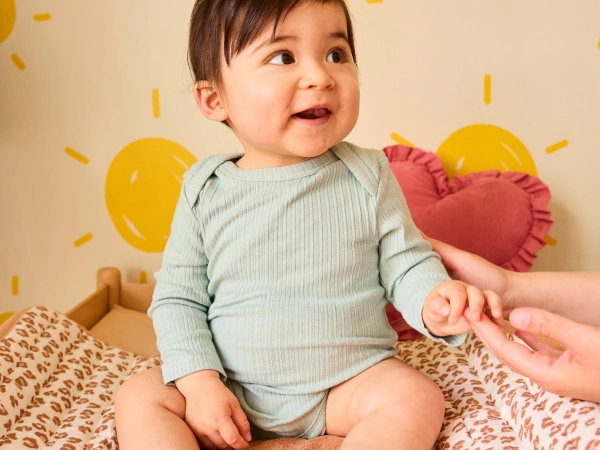
Temperature guidelines for dressing baby
A starting point, not a rule set in stone. These guidelines are here to help, but baby is still our best guide. 🧭
Feeling sweaty? Take off a layer. Is the back of their neck cool? Add one.
- 25°C and above: at home, a short-sleeved bodysuit may be enough. When heading out, stick with the same outfit and add a lightweight sun hat.
- Between 20 and 25°C: a bodysuit and a lightweight outfit should do the trick. For outings, pop a little cardigan in the bag in case the temperature drops or the wind picks up.
- Between 15 and 20°C: add a cardigan over the bodysuit and outfit. If you're heading outside, a jacket and hat can provide extra warmth when there's a chill in the air.
- Between 10 and 15°C: go for a slightly warmer outfit with a cardigan. Outdoors, add a coat and hat.
- Below 10°C: it's time for warmer layers: a cosy outfit and thick cardigan at home, then a warm coat, hat and socks for heading outside.
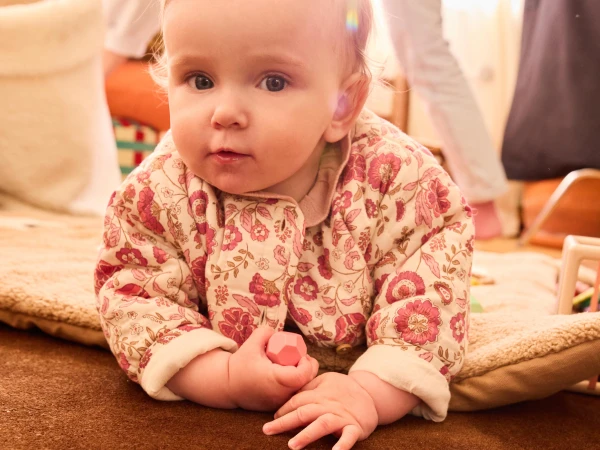
Dressing baby for everyday life
A day at home with baby
This is often when we overdress baby. We feel a little chilly when we get up and assume baby must feel the same. But the house is heated, and if baby is being cuddled or enjoying some tummy time on their play mat at 20°C, a bodysuit and a lightweight outfit are generally enough.
Check the back of baby's neck ten minutes after getting them dressed to see if they're comfortable.
Taking baby out for an hour-long walk
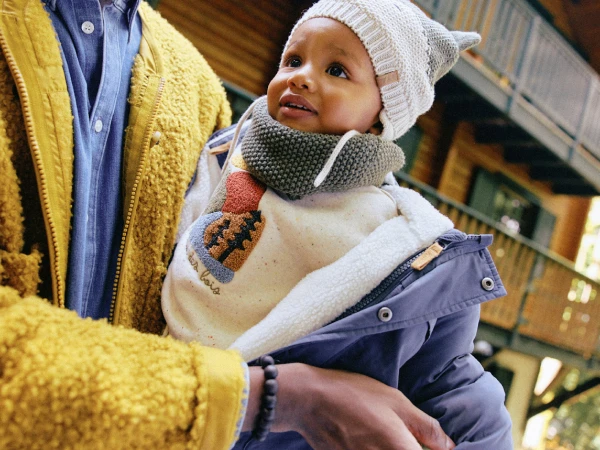
In the pushchair, baby isn't moving around much, so they don't generate much body heat and can get cold more quickly. Add an extra layer and, if it's chilly, pop a little blanket or footmuff over them. And off we go!
With a baby carrier, it's a different story: you're sharing everything, from cuddles to body heat. 😄 Baby is snuggled up against you, soaking up some of your warmth too. So they might need fewer layers than they would in the pushchair.
Keep baby's face clear and check the back of their neck regularly, just like always.
A quick trip to the doctor
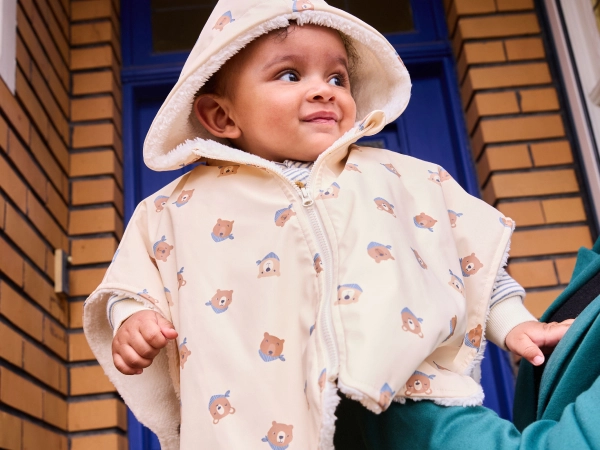
This is often when we overdress baby. We feel a little chilly when we get up and assume baby must feel the same. But the house is heated, and if baby is being cuddled or enjoying some tummy time on their play mat at 20°C, a bodysuit and a lightweight outfit are generally enough.
Check the back of baby's neck ten minutes after getting them dressed to see if they're comfortable.
12°C in the morning, 22°C in the afternoon: what do we do?
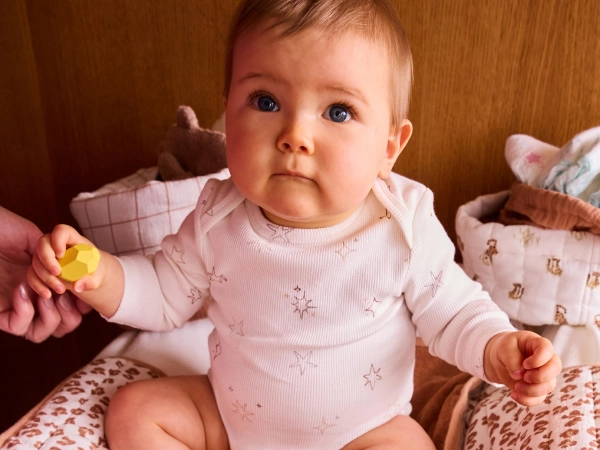
In the pushchair, baby isn't moving around much, so they don't generate much body heat and can get cold more quickly. Add an extra layer and, if it's chilly, pop a little blanket or footmuff over them. And off we go!
With a baby carrier, it's a different story: you're sharing everything, from cuddles to body heat. 😄 Baby is snuggled up against you, soaking up some of your warmth too. So they might need fewer layers than they would in the pushchair.
Keep baby's face clear and check the back of their neck regularly, just like always.
How can you tell if baby's outfit is right for the temperature?
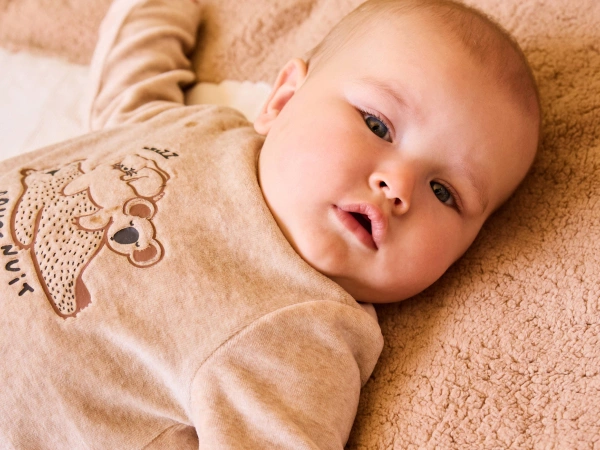
The back of the neck, always. But baby can give us a few other little clues too.
When they're too hot: a flushed face, restlessness, slightly faster breathing or signs of discomfort. Take off a layer and offer baby a feed.
When they're cold: the back of their neck feels cool, their skin may feel cold to the touch and baby might seem less comfortable. That's when we add a layer.
Restlessness can be caused by heat, cold or something else entirely. That's why we don't rely on just one sign. We look at the whole picture: the back of the neck, skin colour, behaviour… Basically, a quick two-second check before reaching for an extra layer or whipping one off. 😄
FAQ: Dressing baby during the day
Does baby always need one more layer than us?
Not necessarily. It's more about dressing baby for the temperature and the situation. A baby lying still in their pushchair won't need the same layers as one snuggled up against you in a carrier or relaxing in a nice warm room. Checking the back of their neck is a handy way to see if they're comfortable.
Do cold hands mean baby is cold?
Baby's hands and feet can feel cool even when they're perfectly comfortable. Rather than relying on those tiny hands alone, check the back of their neck to see how they're feeling.
How should you dress baby when the temperature changes throughout the day?
Think layers from the moment you get baby dressed in the morning. Clothes that are easy to take off, poppers, zips… Basically, pieces you can add or remove throughout the day without having to change the whole outfit.
What about when baby is in a carrier?
Baby is snuggled up against you and benefits from your body heat too. So adjust their outfit to the temperature, just as you would throughout the day. For safety, always keep baby's face clear and visible, with their nose and mouth uncovered. Check the back of their neck every now and then and adjust their layers if needed.
And what about in the car?
For safety, avoid thick coats in the car seat, as they can stop the harness from holding baby securely in place. Dress baby in their usual outfit, fasten the harness snugly, then add a suitable travel poncho over the top if needed.
Dressing baby isn't an exact science.
It's all about paying attention. We try, we adjust, we learn.
And before we know it, we're experts on our own little one. That's parental instinct for you. 😄
Explore our other guides
- Maternity bag: what to pack for the birth
- Baby sleep: understanding it to better support your little one
- TOG explained: choosing the right baby sleeping bag for your baby's room temperature
- Baby ponchos: travel, bath or beach – which one should you choose?
- How to choose the right coat, puffer jacket or jacket for your child