
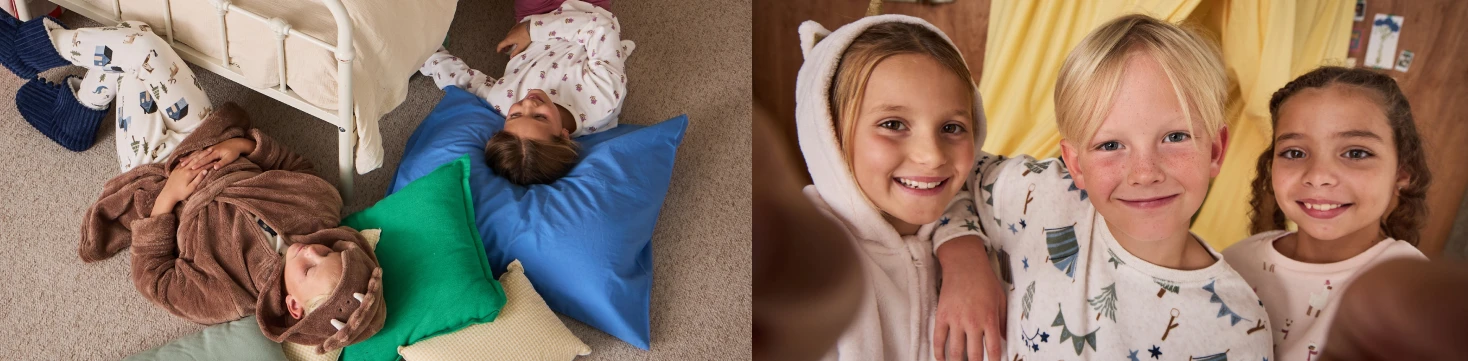
It's 9 pm.
Bedtime has arrived, and your little one is making sure you know it.
To help them settle, you gently close the curtains, dim the lights, little eyes begin to rub, and those final cuddles become part of the bedtime routine. In just a few moments, they'll drift off, either snuggled up to their comforter or somehow lying at the opposite end of the cot, because babies have their own rules. 😄
And yet, in a matter of seconds, a thousand questions race through your mind. Is a bodysuit enough? Should you add sleepsuit? Is this sleeping bag the right one? What if you've dressed them too warmly… or not warmly enough?
Because really, all you want is for your baby to sleep comfortably through the night without turning bedtime into an escape room challenge.
Not to mention trying to fasten poppers in the dark while your baby is already starting to lose patience.
Sometimes, you just wish your baby could whisper exactly what they need.
Think of this guide as that little whisper. Simple, practical advice to help you dress your baby for bedtime with confidence, whatever the situation.
A few essentials, a couple of minutes, and your little one is all set for a cosy night's sleep. All that's left to do is wish them sweet dreams... and hope you get to enjoy yours too. 😄
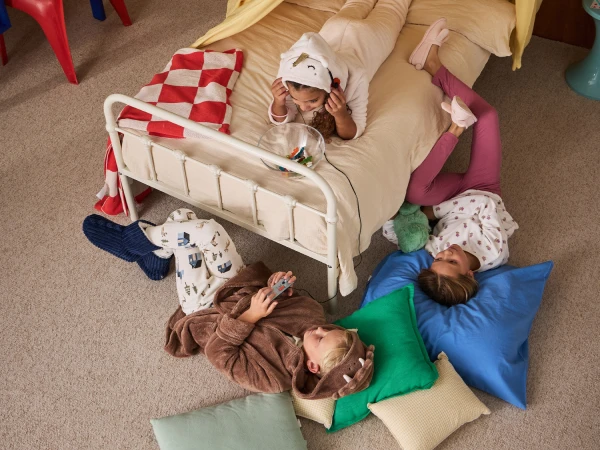
Kids' pyjamas: it all starts with the room temperature
The season gives us a rough idea, but it's the actual temperature of the bedroom that really matters. A well-heated bedroom in December might call for lightweight pyjamas, while a chilly room in June could mean your child needs something warmer than you'd expect.
The season gives us a clue. The room temperature gives us the answer.
Above 20°C, go for short cotton jersey pyjamas in a lightweight fabric. Between 16 and 20°C, lightweight long pyjamas in a slightly thicker cotton jersey work nicely. Below 16°C, it's time to bring out the velour or fleece.
Not sure? You can always ask your child how they're feeling. As they grow, they'll be able to tell you whether they're too hot or too cold, making it easier to adjust their nightwear. For younger children, look for clues instead, like the back of their neck feeling very warm, sweaty or, on the other hand, cool.
In general, a bedroom temperature of around 18 to 20°C is recommended for sleep. Keep an eye on your child, make adjustments when needed and trust your instincts. 😉
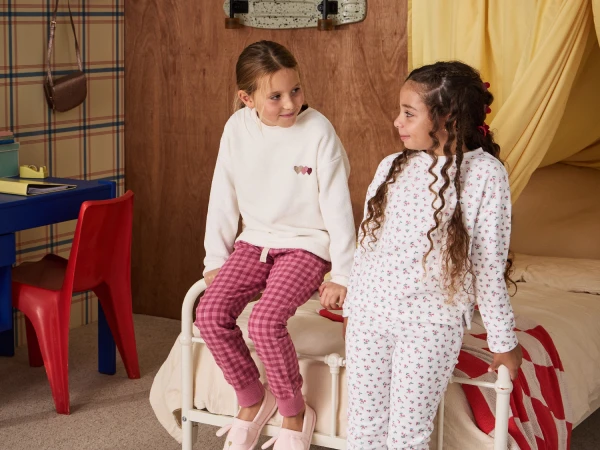
Long or short pyjamas for kids?
Short pyjamas, with shorts and a T-shirt, are super comfy for warmer nights or well-heated bedrooms. Some children wear them all year round if their room stays at a comfortable temperature. After all, loose-fitting shorts make it so much easier to move around.
Long pyjamas are great for cooler nights or for children who wriggle around so much in their sleep that they always end up without their duvet. You know those night-time patrols when we sneak in to tuck them back in, like a bird keeping watch over its nest. 🤣
In the end, it's about the room temperature, but also about your child. If they're not exactly best friends with their duvet, go for something long and cosy. If they wake up all sweaty, switch to short, lightweight pyjamas.
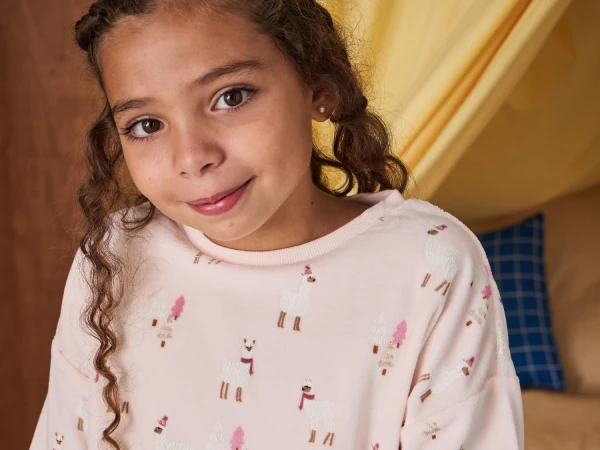
Which fabric is best for kids' pyjamas?
Fabric makes a BIG difference to comfort, so which one should you choose?
Cotton jersey
A reliable choice all year round, and probably the fabric we wear most often ourselves. It's not about having a favourite, it's simply the most versatile option. Soft, breathable and stretchy, it lets your child move around comfortably without feeling itchy. Plus, there's a lightweight version for warmer nights and a thicker one for those in-between temperatures. It's a bit like a Swiss Army knife: always handy to have around.
Velour
Warm, soft and wonderfully snuggly, velour is the kind of pyjama fabric that makes you want to stay in your PJs all day. 😄 It keeps the warmth in and is a lovely choice for chilly nights or winter, without making your child feel too hot if the bedroom is kept at a comfortable temperature.
And let's face it, there's something so comforting about it that takes us straight back to cosy winter evenings: hot chocolate, the Christmas tree all lit up and those super-soft pyjamas we never wanted to take off. Even as adults, we still remember that lovely warm, snuggly feeling. ❤️
Fleece
An even warmer option. Perfect for lower temperatures or children who tend to feel the cold. Just make sure the bedroom is genuinely cool before choosing fleece. Otherwise, you might find yourself dealing with those middle-of-the-night wake-ups because they're too hot.
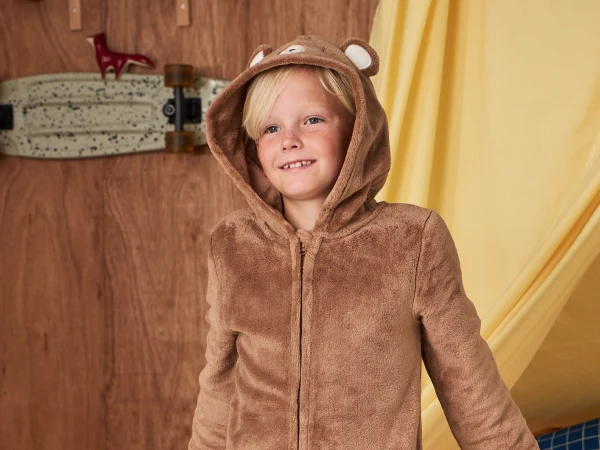
Kids' dressing gowns
A dressing gown is that extra layer to slip on when your child gets out of bed, then take off once they're nice and warm. Most importantly, it stops our little ones from dragging their duvet all around the house until it ends up looking like a floor mop. 🤣
And let's face it, there's something SO comforting about being wrapped up in warmth from head to toe when it's chilly. Your little one slips it on, ties the belt, pulls up the hood and they're all set for some serious chilling. 😄
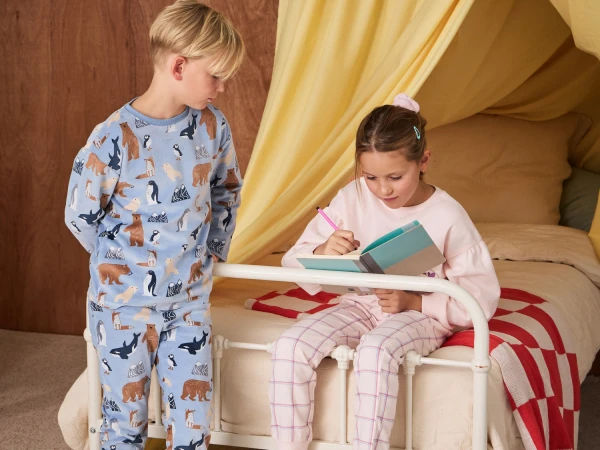
Kids' pyjamas: fit and size
Pyjamas that feel tight around the waist? Your child probably won't want to keep them on for long. And when they're getting too short at the ankles or wrists, chances are they've had their day. RIP…
When trying them on, the main thing is to check that the elastic waistband stays in place without digging in. The sleeves and legs should be long enough without pulling, and your child should be able to raise their arms, squat down, roll over and move around freely.
That way, when you find them at the other end of the bed in the morning, you'll know they've spent a good part of the night wriggling around without their pyjamas getting in the way. 😄
As for sizing, if you're between two sizes, go for the bigger one. Slightly loose pyjamas will always be more comfortable than ones that are too small, pull or restrict movement.
Maybe that old saying about children growing overnight isn't such a myth after all. 😄 So if their pyjamas are a little big today, chances are they won't stay that way for long!
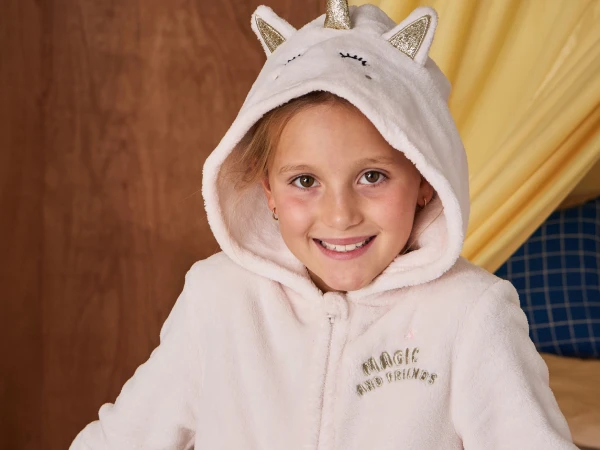
Kids' pyjamas and learning to dress independently
At around 3 or 4 years old, children start learning to get dressed and undressed on their own. And pyjamas are the perfect place to start, mainly because we've got a lot more time and patience at bedtime than we do in the morning. 🤣
So yes, pyjamas that are easy to put on and take off definitely make life easier. And if they make those middle-of-the-night trips to the toilet simpler too, even better!
So, what should you look for? An elastic waistband rather than buttons, a stretchy neckline that slips easily over the head and fastenings that little hands can manage. The easier the pyjamas are to handle, the more confident your child becomes at getting dressed independently.
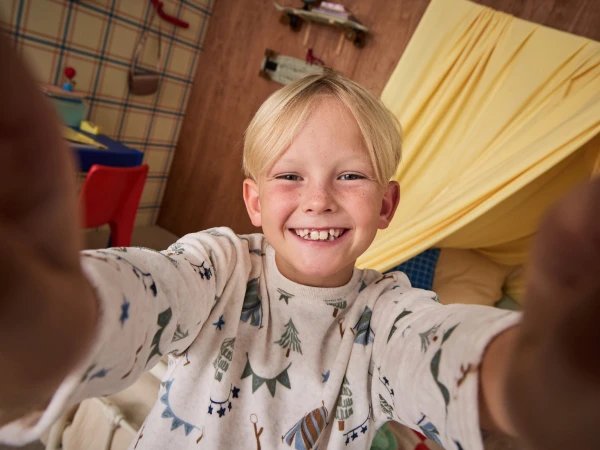
Letting your child choose their pyjamas
A child who loves their pyjamas will happily put them on without a fuss. A child who doesn't? They'll always find a reason to wear something else, or insist on sleeping in last week's favourites that are still sitting in the laundry basket.
The patterns, the colours, their favourite characters. As long as the pyjamas tick all the comfort boxes, they might as well be something your child actually likes. Bedtime routines are often much easier when little ones get a say in what they wear.
And between you and me, if there's one thing we can let them choose without narrowing down the options first, it's their bedtime outfit. 🤣
Kids' pyjamas aren't just for sleeping
Sunday morning lie-ins. Reading for an hour before bedtime. Sleepovers at a friend's house, that big moment when your child sleeps somewhere new and wears their pyjamas in front of everyone else.
And then there's the Christmas pyjamas, the ones they wear on Christmas morning to unwrap their presents and sometimes keep on all day. It's one of those special family moments we love to capture in photos, and it deserves a pair of pyjamas to match.
FAQ: Kids' pyjamas
How many pairs of pyjamas does a child need?
Between the pair covered in apple purée, the ones that took a beating at dinner and the ones you're desperately searching for at the bottom of the laundry basket, it's always handy to have a few spares. 😄 Two or three pairs of pyjamas are usually enough to keep things ticking over. And if your child still has the occasional night-time accident, or the washing machine doesn't run every day, it's worth having a few extras. Having clean pyjamas ready when you need them? Priceless.
When should you go up a pyjama size?
When the sleeves start looking a little short, the bottoms creep up towards the calves or the waistband begins digging into their tummy, it's usually time to go up a size. And if your child keeps tugging at their pyjamas in every direction to get comfortable, they might just be trying to tell you something. 😄
Can children wear pyjamas all year round?
Of course! The fabric and fit can simply change depending on the bedroom temperature: something lightweight when it's warmer and a cosier fabric for chilly nights. As for the style, some children are perfectly happy wearing long pyjamas all year round, while others prefer switching to shorts as soon as they start feeling warm. What matters most is that your child feels comfortable while they sleep.
What pyjamas should your child wear to a sleepover?
When they're sleeping over at a friend's house, children often want to bring out their favourite pyjamas. The ones they really love, think look great and feel comfortable wearing. And on an occasion like that, their pyjamas might just have a little wow factor. 😄
How should you dress baby for sleep?
For little ones, the guidelines are slightly different. Bedroom temperature, suitable sleepwear and signs that baby is comfortable: our guide How to dress baby for sleep will help you choose the right bedtime outfit.
The perfect pyjamas are the ones your child sleeps really well in, but also the ones they can't wait to put on all by themselves, like a big kid. 😄
Explore our other guides
- Maternity bag: what to pack for the birth
- Baby’s first outfit: how to choose the right one
- How to dress baby during the day according to the temperature
- How should you dress your baby at night according to the room temperature?
- Baby sleep: understanding it to better support your little one
- TOG explained: choosing the right baby sleeping bag for your baby's room temperature
- Baby ponchos: travel, bath or beach – which one should you choose?
- How to choose the right coat, puffer jacket or jacket for your child